top of page

Report: LAIN MACAM 2025

更新日:2 日前


Artist and Work, LAIN MACAM 2025


Introduction


From December 19 to 28, 2025, I participated in LAIN MACAM (Langkawi International Marble Art Camp) 2025, an artist-in-residence program organized by the National Art Gallery Langkawi in Malaysia. Over the course of ten days, eighteen artists from nine countries—Malaysia, Thailand, Singapore, Indonesia, China, Japan, India, Nepal and Jordan—gathered on Langkawi Island to create sculptural works using locally sourced marble.


Although the program officially lasted ten days, the actual production period was limited to approximately five days once installation, transportation, and the opening events were taken into account. This resulted in an extremely tight schedule. For me, this was my first experience creating a work primarily from marble. My only prior exposure to stone sculpture had been during university coursework, so I began the process cautiously, relying on distant memories of those classes. Nevertheless, my past experience ultimately proved valuable, allowing me to complete a work that I found deeply satisfying.


The completed work produced during this art camp has since become part of the collection of the National Art Gallery Langkawi.


はじめに


 2025年12月19日から28日までの10日間、マレーシア・ランカウイ島にて開催された「LAIN MACAM(Langkawi International Marble Art Camp)2025」に参加した。本プログラムは、マレーシア国立美術館ランカウイ主催によるアーティスト・イン・レジデンスであり、マレーシア、タイ、シンガポール、インドネシア、中国、日本、インド、ネパール、ヨルダンの9カ国から18名のアーティストが集い、現地の特産素材である大理石を用いた彫刻作品の制作が行われた。

 会期は10日間であったが、搬入・設営やオープニングレセプション等を除くと、実質的な制作期間は約5日間に限られており、非常にタイトなスケジュールであった。私自身、大理石を主素材として作品を制作するのは今回が初めてであり、大学時代の授業で触れた石彫の記憶を手がかりに、手探りで制作を進めることとなった。

 なお、本プログラムにおいて制作した作品は、最終的にマレーシア国立美術館ランカウイに収蔵された。


Langkawi jadi pentas seni arca dunia menerusi LAIN MACAM 2025 | BERNAMA TV

Past Program: INTERNATIONAL MARBLE ART CAMP (IMAC) 2021

Beginning of the Production — Encounter with the Marble


On the first day of production, not all of the marble blocks provided to the artists were uniformly cut. Only a few stones had been shaped into clean rectangular blocks. The stone assigned to me, however, was left in a rough, raw state, retaining its natural fractures and irregular contours. Its form differed greatly from my original sketch, forcing me to reconsider my plan at an early stage.


As I began to work with this stone, I gradually felt that its naturally formed shape should be respected and incorporated into the final work. Safety equipment—including masks, goggles, and gloves—was fully provided, and although this was my first time working seriously with marble, I cautiously began carving with a grinder and chisel.


The workspace was exposed to strong sunlight in the mornings, which made progress difficult. While working under these conditions, I received advice and support from an artist working nearby, and through this exchange, I slowly became more comfortable with both the material and the tools.


制作の始まり ― 大理石との出会い


 制作初日、支給された大理石はすべてが均一にカットされたものではなく、あらかじめ直方体状に整形されていたのは数個のみであった。私に割り当てられたのは、切り出されたままのラフな状態で、自然な割れや起伏を残した石である。当初用意していたスケッチとは形状も大きさも異なっており、この時点で計画の見直しを迫られた。

 しかし、この偶然与えられた自然石に向き合う中で、次第に「この石がもともと持っている形そのものを生かす作品にしたい」と考えるようになった。安全防具(マスク、ゴーグル、手袋等)は十分に支給されており、初めて扱う大理石と工具に慎重になりながら、グラインダーとチゼルを用いて少しずつ加工を始めた。

 作業を進めるうちに、石に対して過度に形を与えるのではなく、最小限の手仕事によって、この石が持つ魅力を引き出すという方向性が明確になっていった。午前中は直射日光が強く、作業環境としては厳しい条件であったが、隣で制作していた他国のアーティストから助言を受けながら、石との距離を徐々に縮めていった。


The sculpture production site under a tent
Local artists’ residences and studios behind the art camp

Discovering the Form


On the following day, I flattened the bottom surface of the stone and then turned it over to work on the upper surface. The piece weighed nearly 100 kilograms, and turning it required the effort of four people. Although the task seemed risky, we managed it safely. Once the stone was flipped, I noticed a valley-like depression in its center. This concave form strongly resembled a natural mountain landscape, and I found it visually compelling.


From that moment, my focus shifted to how this feature could be preserved while refining the overall form of the sculpture. Rather than eliminating irregularities, I began to think about how the stone’s existing character could be emphasized.


As the surface work progressed and the form gradually emerged, I began to feel as though I was in dialogue with the stone itself. This sensation led me to title the work Dialogue.


立ち上がるかたち


 数日目、底面を平らに仕上げた後、約100kg近い石を彫刻台の上でひっくり返す作業があった。4人がかりで慎重に行い、無事に反転させることができた。その際、石の中央部に谷のような凹みがあることに気づいた。それは実際の山やランドスケープを想起させる形状であり、非常に魅力的であった。この凹みをどのように残し、全体を成立させるかが制作の重要なポイントとなった。

 面の処理が進み、全体像が見え始めた段階で、作品はまるでこちらに応答してくるかのような感覚を持ち始めた。この感覚から、作品タイトルを 《Dialogue(対話)》とすることを決めた。
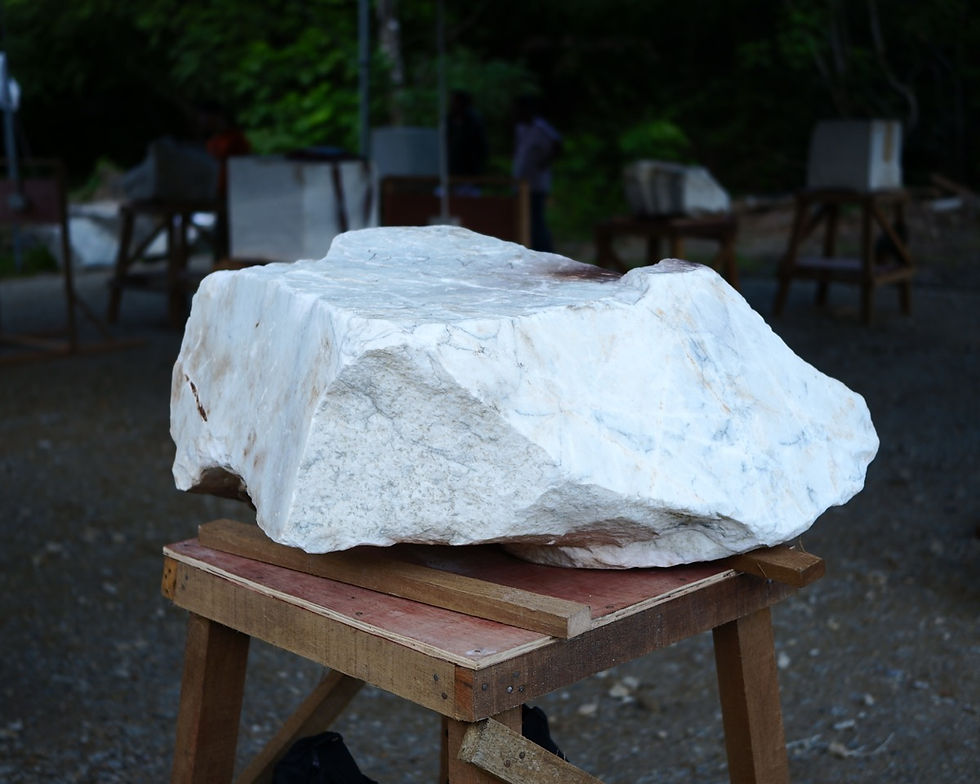

The marble I selected

Refinement and Finishing


I turned the stone over once again to refine the base, and after doing so twice, I decided to avoid any further rotations. From that point on, I worked carefully but efficiently to finalize the surfaces. Compared to iron, marble allows for relatively smooth and direct surface refinement, and I found the process of grinding and shaping the planes both engaging and rewarding.


The skills I had learned in university sculpture classes—particularly the importance of a stable base—proved essential at this stage. I gradually progressed through finer abrasives, finishing the surface with 1000-grit sandpaper. The contrast between the white and dark areas of the marble became increasingly vivid, and the balance between the natural, untouched areas and the refined surfaces felt well resolved.

This process brought back the same excitement and sense of fulfillment I had previously experienced when working with iron. I felt strongly that this was a direction I would like to continue exploring in my future practice. After signing the work, I considered it complete and felt confident in the result.


仕上げ ― 素材との対話


 底面を再度加工するために石を二度反転させたが、これ以上ひっくり返すことは避けたかったため、丁寧かつスピーディーに作業を進めた。大理石は鉄に比べて面が出しやすく、グラインダーによって面が滑らかになっていく過程は非常に心地よいものであった。大学時代に学んだ彫刻の基礎が生きていることを実感した。

 最終的にペーパーは1000番までかけ、白と黒の模様のコントラストが際立つ仕上がりとなった。ナチュラルに残した部分と、人の手を加えた部分のバランスも良く、納得のいく作品に仕上がった。鉄の作品を制作していた時と同じ、あの高揚感と快感を味わった。


Work in progress
Work in progress
Lunch at the production site
Loading the artwork onto a truck

Exchange and Shared Experiences


After the completion of the artworks, the program included time for relaxation and cultural exchange. One day was dedicated to sightseeing, including island hopping by boat. The silhouettes of the islands and mountains viewed from the water, as well as the experience of exploring caves, left a strong impression. The scale and vitality of the local vegetation were overwhelming.


In the evenings, spontaneous gatherings among the artists took place. On one occasion, fourteen artists gathered in a hotel room to present their own works and artistic practices. Each artist spoke about their daily work and conceptual approach in English. This session became an invaluable opportunity to practice presenting my work in an international context and to deepen mutual understanding. More than anything, the atmosphere of trust and openness that emerged among the participants was deeply meaningful. I felt genuine respect for each of the artists and was grateful to be part of such a group.


交流とプログラム


 制作終了後は観光や交流の時間も設けられた。アイランドホッピングでは、ボートから見える島々や山のシルエット、洞窟の景観に強い印象を受けた。また、夜にはアーティスト同士による自主的な作品プレゼンテーションが行われ、それぞれの制作背景やコンセプトを英語で共有した。これは非常に有意義な時間であり、国際的な文脈で自作を語る良い訓練となった。


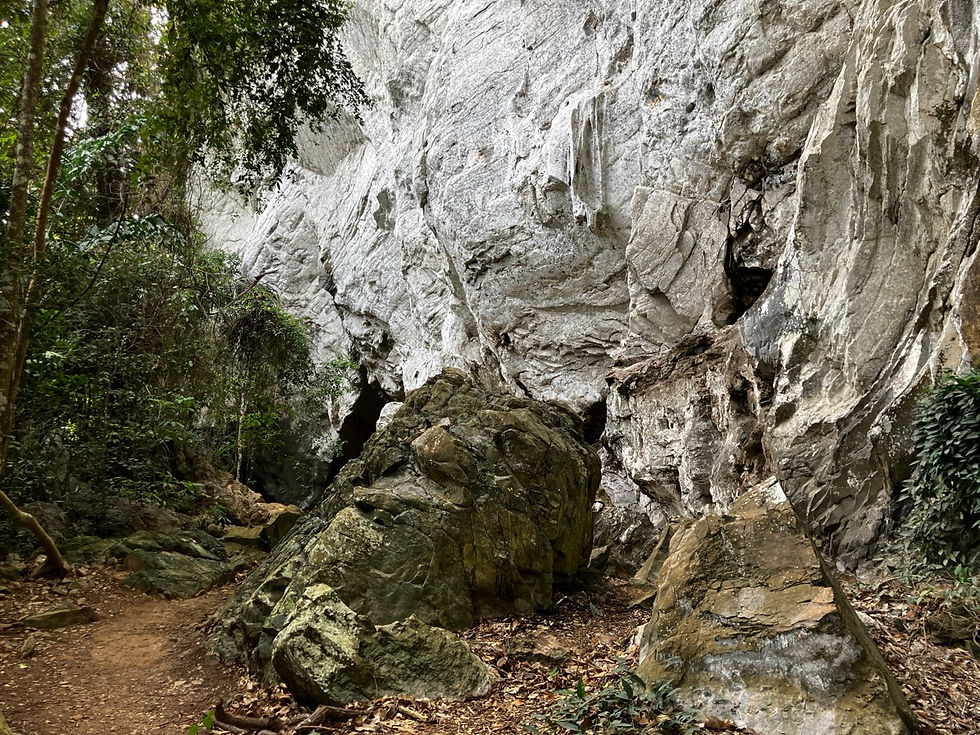
Listening to the guide’s explanation on the boat
Scenes from island hopping
Exploring a cave
Exploring a cave


Exhibition and Opening Ceremony


The opening ceremony was held in the evening at the museum, where the completed works were displayed indoors and a large tent was set up outside for dining and socializing. While I was somewhat dissatisfied with the placement of my work—positioned toward the back corner of the exhibition space—I also recognized that this was unavoidable in a group exhibition of eighteen artists.

That said, I felt that more consideration could have been given to lighting and overall exhibition design. The opening itself was a grand event, attended by curators and distinguished guests from Kuala Lumpur. During the VIP viewing, I had the opportunity to present my work directly.


I explained that Dialogue was created through an ongoing conversation with the marble—deciding which parts of the stone to preserve and which to refine. Compared to many other works in the exhibition, my sculpture retained much of the stone’s original mass and emphasized its weight and presence. The refined surfaces were shaped to feel smooth and natural to the touch, without any sense of discomfort, allowing the viewer to engage physically with the material in a calm and intuitive way.


Many artists from other countries approached their work by carving a preconceived image out of the stone. In contrast, my approach was to harmonize human intervention with the stone’s existing natural form, ensuring that my actions did not overpower the material itself. Recognizing this difference objectively was one of the most significant discoveries of the camp.


Interestingly, the two other Japanese artists also produced works that made strong use of natural stone forms. I felt that this sensitivity to material may reflect a distinctly Japanese aesthetic. How this sensibility can be developed as a strength within an international context is a question that has become increasingly clear to me through this experience.


オープニングと展示を通して


 オープニングセレモニーは美術館内外で盛大に行われ、多くの来賓が来場した。展示位置についてはやや不満も残ったが、18名によるグループ展という性格上、ある程度は致し方ないと感じている。一方で、展示構成やライティングに対しては改善の余地を感じたのも事実である。

 VIP向けの作品説明では、《Dialogue》が「大理石と対話しながら、どこを残し、どこに手を加えるかを探り続けた作品」であることを説明した。他国の作家が石の内部に明確なイメージを掘り出すアプローチを取る中で、私は石がもともと持つ自然のかたちを尊重し、人の手が過度に介入しない形を模索した。この違いを客観的に認識できたことは、今回の大きな収穫である。

 偶然にも、他の日本人作家2名も同様に自然形を生かした作品を制作しており、これは日本的な感性の一端であると感じた。この感覚をどのように武器として世界の中で展開していくか――その課題が、今後の制作に明確に立ち上がったアートキャンプであった。


Opening ceremony
Opening ceremony

Exhibition venue (1)
Exhibition venue (2)
Exhibition venue (3)

"Dialogue" Marble, 40x90x60cm (2025), Kazutaka Shioi, Collection: National Art Gallery Langkawi
Artwork details (1)
Artwork details (1)
Artwork details (2)
Artwork details (2)
Artwork details (3)
Artwork details (3)


Proglam: Langkawi International Marble Art Camp
Date: 19 December until 28 December 2025
Period: 10 days, 9 nights
Organized by National Visual Arts Development Board, Malaysia
Coordinated by National Art Gallery Langkawi, Kedah, Malaysia
Supported by Ministry of Tourism, Arts and Culture of Malaysia

プログラム名:ランカウイ国際大理石アートキャンプ
開催期間:2025年12月19日〜12月28日
期間:10日間(9泊)
主催:マレーシア国立ビジュアルアート開発庁
運営:マレーシア国立美術館ランカウイ
後援:マレーシア観光芸術文化省


The National Art Gallery Langkawi will be organising the “Langkawi International Marble Art Camp (LAIN MACAM) 2025”, an International Sculpture Art Camp. The programme highlights marble as both a natural resource and an artistic medium, bringing together artists to explore, shape and transform Langkawi marble into contemporary sculptural works.


LAIN MACAM 2025 features the participation of 18 artists from 9 countries, comprising Malaysia, Thailand, Singapore, Indonesia, China, Japan, India, Nepal and Jordan.


The programme will take place at Gunung Raya Art Space (GRAS) from 19th to 28th December 2025.


Subscribe to Newsletter

​ニュースレターを購読する

Thank you for subscribe.

  • https://www.youtube.com/channel/UC1Ana59J2aTI1KN7M681tTw

KAZUTAKA SHIOI|塩井一孝

bottom of page