Report: Barehands Residency in Malaysia 2024|レポート:ベアハンズ・レジデンシー・イン・マレーシア 2024
- 2025年3月1日
- 読了時間: 16分
更新日:4月6日
In the summer of 2024, I participated in the "Barehands Residency" artist-in-residence program in Malaysia, spending a month creating new work. Each day was filled with inspiration. Through total immersion in my practice and meaningful exchanges with local artists and organizers, I truly felt myself growing as an artist.
Upon returning home, I compiled a photo book titled "Light of Langsuir -A New Myth-" to document this residency. In this post, I’ll be sharing a selection of its contents. I hope it serves as a helpful resource for anyone interested in traveling to Malaysia or participating in an artist residency.
2024年の夏、マレーシアのアーティスト・イン・レジデンスプログラム「Barehands Residency(ベアハンズ・レジデンシー)」に参加し、1ヶ月間の滞在制作を行いました。毎日が刺激的で、作品制作に没頭しながら地元のアーティストや関係者の方々と交流することで、作家として成長できたことを実感しています。
そして帰国後、滞在制作の記録をまとめた作品集『Light of Langsuir -A New Myth-』を制作しました。その一部をこの記事で紹介します。マレーシア旅行や滞在制作に興味のある方の参考になれば幸いです。
Light of Langsuir: A New Myth
01 Before Departure: Shifting Plans
My residency in Malaysia was a series of challenges that tested my flexibility. Many situations arose where the ways I was accustomed to working in Japan simply did not apply, making the experience a true encounter with the unknown.
Although I had decided to participate in the project a year earlier, I was unable to receive detailed information from the host artist, Juhari, regarding the schedule, accommodation, or travel arrangements, and as the departure date neared, my anxiety grew. Eventually, the manager, Nazura, became involved and negotiations progressed quickly, but the funding source was not decided until two months before departure, and the possibility of covering the entire cost myself loomed. Juhari’s optimistic remark, “As long as you book the flight, everything will work out!” only heightened my internal unease.
Amidst this, thanks to Juhari’s efforts, the Japan Foundation, Kuala Lumpur decided to offer full support. I was finally able to relax. I later learned that the support had been confirmed from the beginning, but the information had not been conveyed to Juhari and the team. Hearing this made me think, “If only I had known earlier!” but looking back now, it’s almost a funny story.
Light of Langsuir:新たな神話
01 出発前:揺れる計画
マレーシアでの滞在制作は、柔軟性を問われる出来事の連続だった。日本で慣れ親しんだやり方が通用しない場面も多く、未知との遭遇そのものだった。
プロジェクトへの参加は1年前から決まっていたが、受け入れ先のアーティストであるジュハリからスケジュールや宿泊先、旅費手配などの詳細な情報がなかなか得られず、出発が近づくほどに不安は増していた。途中からマネージャーのナズラが介入し、一気に交渉が進んだものの、助成先は出発2ヶ月前まで決まらず、全額自己負担の可能性が頭をよぎった。ジュハリの「航空券さえ取れば何とかなるよ!」という楽観的な言葉に、内心の不安はかえって大きくなっていた。
そんな中、ジュハリたちの尽力により、国際交流基金クアラルンプール日本文化センターが全面的に支援してくれることが決定。ようやく胸をなで下ろすことができた。実は、支援は当初から決まっていたらしいが、その情報がジュハリたちに伝わっていなかったという後日談を聞いたときは「もっと早く知っていれば」と思わざるを得なかったが、今となってはそれも笑い話だ。


02 Language Barrier: Frustration
When I arrived, the language barrier turned out to be less of a problem than I had feared. The English conversation classes I had started taking six months earlier unexpectedly paid off, and I managed to participate in a local radio show and a talk session at the National Art Gallery Langkawi. However, I was often impressed by the bilingual fluency of local art professionals who seamlessly switched between Malay and English, and I felt keenly aware of my own limitations. I often regretted not being able to engage in deeper discussions about religion and culture, wondering how much more enriching the exchanges could have been had I been more fluent.
02 言語の壁:悔しさ
現地に到着してみると、言語の不安は思ったより大きな問題にはならなかった。半年前から付け焼き刃的に通い始めた英会話教室の効果が意外と発揮され、現地のラジオ番組出演や個展でのトークセッションもなんとか乗り切ることができた。しかし、マレー語と英語を自在に使い分ける現地のアート関係者の語学力には驚かされ、自分の力不足を痛感する場面も多かった。特に宗教や文化についてもっと深く議論できていたら、どれほど充実した交流ができただろう、と悔しさを覚えた。


03 Life in Malaysia: Prayer and Nature
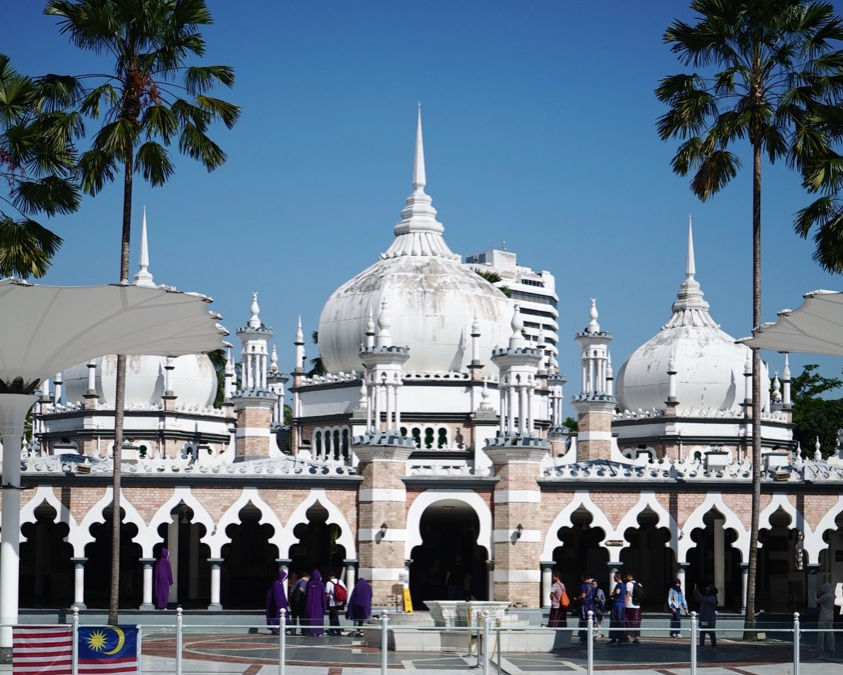
In Malaysia, Islam is at the core of daily life. Every morning around 5 a.m., the sound of the call to prayer echoes from the mosque, and the still, dimly lit surroundings of the studio are enveloped in a sacred atmosphere. The scene was mystical, with a beauty that brought a sense of calm amidst the silence.
The Muslims, who live disciplined lives without alcohol and pray five times a day, made me feel strongly that humans and nature coexist in harmony. The morning and evening are surprisingly cool, and the scorching heat of the day is reset by sudden thunderstorms. This natural cycle, which feels like the flow of life itself, made me deeply appreciate the connection between humans and nature.
03 マレーシアでの生活:祈りと自然
マレーシアでは、イスラム教が生活の根幹を成している。毎朝5時前後の夜明け前には、遠くモスクからコーランの祈りの歌が聞こえ、まだ薄暗いスタジオ周辺が神聖な空気に包まれる。その光景は神秘的で、静けさの中に安心感を伴った美しさがあった。
日々祈りを欠かさず、お酒を飲まず規律ある生活を送るムスリムの人々の姿は、スコールによる天候のリズムと相まって、人間と自然が共存していることを強く感じさせた。朝晩は意外に涼しく、日中の蒸し暑さも突然の雷雨によってリセットされる。この自然のサイクルは、人生の巡りに似たものを感じさせ、人と自然の深い結びつきを感じた。

04 Inspiration: Malaysian Mythology
During my stay, the creation of my work began with choosing the Paku Langsuir (also known as the giant fern or “Ootaniwatari” in Japan), which grew abundantly in Juhari’s studio garden. In Malaysian mythology, the Paku Langsuir is a sinister plant symbolizing the female ghost “Langsuir.” The ghost of a woman who died during pregnancy or childbirth is said to be linked to this plant, and the story is quite chilling. Many elderly Malaysians avoid planting such a “bad omen” in their gardens, but Juhari laughed and said, “I plant it because I think it’s beautiful. That’s all.” Drawn to this simplicity, I decided to use the plant as the material for my work.
The title of the exhibition is “Light of Langsuir.” It’s an attempt to shed light on the tragic mythology of Langsuir and create a new myth. I decided to capture the “light” of the jungle through photography and use it to overlay the images onto the leaves.
04 着想:マレーシア神話
滞在中の制作は、ジュハリのスタジオに群生するパク・ランスウィヤー(日本名:オオタニワタリ)を素材に選ぶところから始まった。マレーシア神話において、パク・ランスウィヤーは女性の亡霊「Langsuir(ランスウィヤー)」を象徴する不吉な植物として扱われる。吸血鬼の一種で、妊娠中や出産中に死亡した女性の幽霊がこの葉と結びついているという、なかなかゾッとする逸話だ。ご高齢のマレーシアの方の中には、「こんな不吉な植物を庭にわざわざ植えるなんて…」と敬遠する人もいるという。
しかし、ジュハリは「美しいと思うから植えている。ただそれだけだ」と笑いながら話してくれた。その“ただ美しいから”というシンプルさに惹かれ、私はこの植物を作品の素材にしようと決めた。個展のタイトルは「Light of Langsuir」。ランスウィヤーの悲しい神話に光を当て、新たな神話を創造する試みだ。私はジャングルの“光”を写真で切り取り、それを葉に貼り合わせる作品を構想することにした。


05 Creation: Purification of the Material
The process of creating the work began with coating the large leaves of the Paku Langsuir with white acrylic paint. I meticulously painted both sides to enhance the vibrancy of the photographs I would later apply, but for me, it was also an act of “resetting the material’s story and making it an empty vessel.” The dark green color of this tropical plant is considered to have an “ominous” side in mythology. However, by painting it white, like a ritual purification, I was able to remove the negative imagery and create an “empty space” where new meanings could be received.
The work itself was simple, and as I repeated the process, I naturally became absorbed in it. As the leaves gradually transformed into a clean, white state, I felt a sense of personal purification as well. When the leaves lost their texture and became wrapped in the pure white, I felt as if the “vessel to receive new myths” had truly emerged.
05 制作:素材の浄化
制作プロセスはまず、このパク・ランスウィヤーの大きな葉をアクリル塗料で白く塗ることから始まる。両面すべてを丁寧に白く塗るのは、上から貼る写真の発色を良くするためでもあるが、私にとっては「素材の物語を一度リセットし、空っぽの器のような状態にする」という行為でもあった。濃い緑色を持つこの植物は、神話的には“不吉”とされる側面がある。しかし、それを一旦白くすることで、まるで禊ぎのようにネガティブなイメージを取り払い、そこに新しい意味を受け入れる“余白”をつくるのだ。
作業自体は単純で、何回も繰り返し塗っていると自然と無心になっていく。葉が白く変容していく様子に、自分自身も何かが浄化されていくような感覚を持った。次第に葉のテクスチャーが消え、潔い白さに包まれた姿になったとき、まさに「新たな神話を受け入れる器」がそこに現れたのだ。

06 Photographs of Light: The Energy of the Place
I printed the photographs of the light in the surrounding jungle onto washi paper and carefully adhered them to the white leaves. For me, photographs are not just records, but a medium through which the energy and atmosphere of a place are transferred. The reason people cannot easily step on or discard cherished photographs is that they perceive them as more than just material; they hold a deeper significance. This is similar to how icons are viewed as windows to the divine, or how the Jomon people (prehistoric inhabitants of Japan) believed that spirits resided in clay figures. Photography has the ability to make people feel the invisible forces behind shapes.
For this work, I primarily used vivid photographs of tall tropical plants unique to the jungle, the blue sky resonating with the sound of the call to prayer, and the views of orchards. The bright colors of flowers, the ground after rain, and the sunlight filtering through the forest all transformed into soft textures when printed on washi paper, giving them a unique presence on the white-painted leaves. By resetting the plant’s original “Langsuir” story and overlaying it with the “light” of the jungle, I experienced a feeling of purification, as if the tragic ghost was being cleansed.
06 光の写真:場のエネルギー
スタジオ周辺のジャングルで撮影した光の写真を和紙に印刷し、白くなった葉の表面に一枚一枚丁寧に貼り合わせていった。私にとって写真は単なる記録ではなく、場の気配やエネルギーを転写するための素材である。人が大切な写真を踏みつけたりできないのは、それを物質以上の存在と捉える感覚があるからだと思われる。それは、イコンが天国を映す窓として神や聖人との交わりを象徴するのに似ている。また、縄文人が土偶に精霊が宿ると信じた感覚にも通じる。写真は「かたちの向こうにある目に見えない力」を人に感じさせる構造を持っているのだ。
今回の作品では、ジャングル特有の背の高い熱帯植物や、コーランの歌声が響く青い空、果樹園の景色を切り取った写真を主に使った。雨上がりの地面や森に差し込む陽光、生命力あふれる花々を写したビビッドな色彩。それらを和紙に印刷するとやわらかな質感に変わり、白く塗られた葉の上で独自の存在感を放った。葉そのものが持っていた“ランスウィヤー”としての物語をリセットし、そこにジャングルの“光”を貼り付けることで、悲しい亡霊がまるで浄化されていくような感覚を得た。


07 Exhibition: A New Myth
At the National Art Gallery Langkawi’s exhibition space, I created around 20 pieces by suspending the leaves from the ceiling with transparent wires, allowing them to sway gently in the wind. The layout was designed so that the viewers could walk through and “experience” the jungle I had lived in. The leaves floated and reflected the light and colors of the photographs, shimmering in the space. Their movement was like that of a hovering ghost, but it also conveyed a refreshing sense of vitality.
The title “Light of Langsuir” encompasses the intention of “updating a tragic myth through light.” I combined the image of the “female ghost” in Malaysian mythology with the “light” of the Japanese goddess Amaterasu, the highest female deity, and sought to regenerate a new myth. In fact, both the curators and the audience found the title intriguing, saying, “It’s a strange title, but there’s something positive about it, which is interesting.”
07 作品展示:新たな神話
国立美術館の個展会場では、この葉を20枚ほど作品化して天井から透明のワイヤーで吊るし、風を受けてゆらゆらと揺れるインスタレーションを組んだ。鑑賞者がその間を回遊できるようにレイアウトし、まるで私が滞在していたジャングルの森を歩くような“追体験”ができる空間を目指したのだ。葉はくるくると漂いながら、印刷された写真の光や色彩をきらきらと場に反射させる。その動きはまるで浮遊する亡霊のようでもありながら、一方でさわやかな生命力をも感じさせた。
作品タイトル「Light of Langsuir」は、“悲しい神話を光でアップデートする”という意図を含んでいる。マレーシアの神話に登場する「女性の亡霊」と、日本の神話における女性最高神、天照大神の「光」のイメージを重ね合わせ、新たな神話を再生しようとした試みである。実際、キュレーターや観客からは「一見、奇妙なタイトルだが、どこかポジティブな印象を感じることが逆に面白い」と興味を持たれた。


08 After the Exhibition: The Border Between Humans and Nature
My past works have all been created under the theme of “expanding the boundaries between humans and nature.” When working in Japan, I often focused on shrines and forests, creating works that explored the intersection of nature and human activity, where ancient beliefs and myths exist and intertwine with the human experience.
During this residency in Malaysia, I witnessed elements completely different from those in Japan, such as the Islamic prayer landscape, the cyclical nature of thunderstorms, and the myths and energies embedded in the jungle. These experiences made the “relationship between humans and nature” feel even more three-dimensional. Particularly, when I had to pause my work due to the rain, I realized that “adjusting to nature” was a fundamental rhythm of life in this region, providing a valuable clue about the fluidity of the boundaries between humans and nature.
The act of painting the leaves white and then layering the local “light” through photographs symbolized the “blending of different elements to create new values.” Humans and nature are not separate entities but are interwoven and cyclical. By expanding these boundaries through art, I wanted to ask viewers, “Where do we come from, and where are we going?” I feel that this exploration was deepened during my time in Malaysia, amidst its diverse culture and rich nature.
08 展示を終えて:人と自然の境界
私のこれまでの作品は、「人と自然の境界を拡張する」という大きなテーマのもとで制作してきた。日本で活動しているときは、神社や森などに焦点を当て、自然と人間が交差する“聖域”のようなものを作品化することが多かった。そこには古来からの信仰や神話が存在し、人間と自然の営みが複雑に溶け合っている。
今回のマレーシアでのレジデンスでは、イスラム教の祈りの風景や、スコールによる自然の起承転結、ジャングルに息づく神話や生命の気配といった、日本とは全く異なる要素を目の当たりにしたことで、“人と自然との関係”がさらに立体的になったと感じている。特にスコールで作業を中断せざるを得ない場面が何度かあったが、「自然に合わせる」という行為自体が、この地に根付いた生活リズムそのものであり、人と自然の境界を曖昧にする大きなヒントでもあった。
制作工程で葉を白く塗り、そこに現地の“光”を写真として重ねる行為は、まさに「異なるもの同士が交わることで新たな価値観を生み出す」象徴だったように思う。私たち人間と自然は、本来別々の存在ではなく、お互いが混ざり合い循環している。その境界を作品によって拡張し、観る人に「私たちはどこから来て、どこへ向かっているのか」を問いかけるのだ。この試みが、マレーシアという異文化と豊かな自然の中でさらに深められたと感じている。


09 Conclusion: Encounters with a Different Culture
From conducting research on Langkawi Island to experiencing unexpected health issues due to strong spices, this residency offered many discoveries through immersing myself in a different culture. While the surface differences between Japan and Malaysia’s natural environments are noticeable, the underlying energy flows are the same, and the sense that “we are born from the same source, flowing with the same essence” grew within me.
I believe that the essence of art, which has long existed alongside faith, remains unchanged today. Art heals the heart, opens new perspectives, and updates stories for the future. It is also possible that works of art, one day, will serve as historical artifacts, bearing witness to the past. Through my work, I hope people can feel the invisible “connections” that transcend nationality, culture, religion, and skin color. And if they realize that “the boundaries between humans and nature are not clear, but rather quite ambiguous,” I will be deeply happy.
The residency in Malaysia truly brought a turning point to my creative theme of “expanding the boundaries between humans and nature.” The jungle hit by storms, the air filled with the sounds of prayer at dawn, and the beauty of the so-called “ominous” Langsuir—“Light of Langsuir” became a manifestation of a new myth woven from all of these. With this experience as my foundation, I will continue to question the nature of the “boundary between humans and nature.”
09 まとめ:異文化との出会い
ランカウイ島でリサーチをしたり、香辛料のきつい食事で思わぬ体調不良になったり、日常の経験も含め、このレジデンスでは異なる文化に身を置くことで多くの発見があった。日本とマレーシアの自然は表面的には異なるが、根底に流れるエネルギーは同じであり、「私たちは同じ源から生まれ、同じものが流れている」という感覚が育まれた。
芸術は古来より信仰と共にあったが、その本質は現代でも変わらないと私は思う。人の心を癒し、価値観を開放し、未来に向けて新しい物語を更新していく。さらに作品とは、いつか考古学的資料として歴史の証言者となる可能性すらある。私の作品を通じて、国や文化、宗教や肌の色の違いを超え、目には見えない“つながり”を感じてもらえたらと思う。そして「人と自然の境界は明確なものではなく、とても曖昧なものである」ということに気づいてもらえたら、これほど嬉しいことはない。
マレーシアでのレジデンスは、まさしく私の創作テーマである「人と自然の境界を拡張する」という営みに大きな転機をもたらしてくれた。スコールに打たれるジャングル、祈りの声に包まれる夜明け前の空気、そして不吉とも言われるランスウィヤーの美しさ。「Light of Langsuir」は、そのすべてが織りなす新たな神話を形にした作品だった。この経験を糧に、私はこれからも「人と自然の境界」の在り方を問い続けていきたい。